
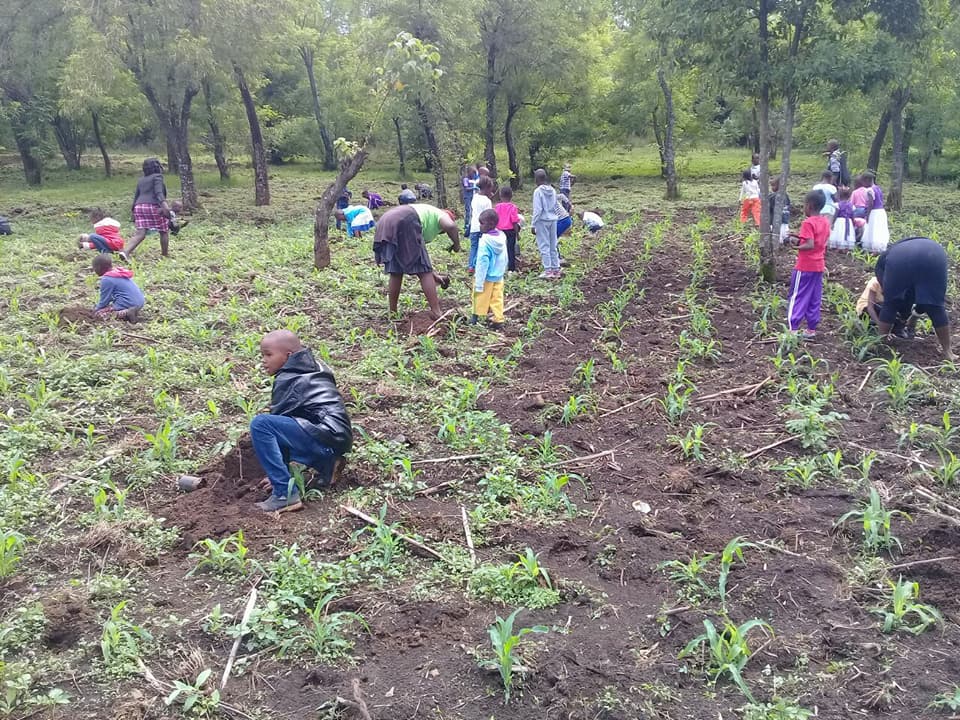
Agribusiness and Community Farming: How Menengai CFA Supports Individual and Group Livelihoods
Agribusiness is one of the key ways Menengai Community Forest Association supports community livelihoods while promoting sustainable use of land and natural resources. Around Menengai, many households depend on farming, small-scale agriculture, tree nurseries, beekeeping, and land-based enterprises for income and food security.
The CFA helps create opportunities for both individual farmers and organized community groups by supporting practical farming activities, encouraging sustainable agriculture, linking farming with conservation, and helping communities turn agriculture into a business.
This work is important because conservation cannot succeed when communities are left behind. When farmers are empowered, trained, organized, and supported, they become stronger partners in protecting the environment.
Formed thousands of years ago through massive volcanic activity, Menengai Crater spans approximately 12 kilometers in diameter and covers an area of about 90 square kilometers. Today, it stands as a symbol of nature’s power and beauty, attracting tourists, hikers, researchers, photographers, and nature enthusiasts from around the world.
Agribusiness as a Livelihood Opportunity
Agribusiness means treating farming not only as a way of producing food, but also as a business that can generate income, create employment, support families, and strengthen the local economy.
Menengai Community Forest Association supports this by encouraging community members to participate in agriculture-related activities such as crop farming, tree nurseries, beekeeping, agroforestry, seedling production, and other nature-friendly enterprises.
Through agribusiness, individuals and groups can earn income while still supporting conservation. This creates a model where the community benefits from the land without destroying the forest or putting unnecessary pressure on natural resources.
Supporting Individual Farmers
The CFA supports individual farmers by helping them understand how farming can work together with conservation. Farmers are encouraged to adopt practices that improve productivity while protecting soil, trees, water, and the surrounding environment.
Individual farmers benefit through access to knowledge, organized opportunities, land-use guidance, tree planting support, and participation in activities such as agroforestry and reafforestation.
In some restoration models, farmers may be allowed to plant crops in designated areas while also taking care of young trees. This gives farmers temporary farming opportunities while helping restore forest cover. As the trees grow, the farmers benefit from crops, and the environment benefits from reafforestation.
This approach helps farmers see conservation as an opportunity rather than a restriction.
Supporting Group Farming
Menengai Community Forest Association also supports group farming initiatives. These may include women groups, youth groups, farmer groups, community groups, and conservation-based self-help groups.
Group farming is powerful because it allows members to share labour, knowledge, resources, land opportunities, responsibilities, and profits. It also makes it easier to organize training, monitor progress, and connect members to larger opportunities.
Through group farming, communities can work together on projects such as:
- Crop farming
- Tree nursery development
- Beekeeping
- Seedling production
- Agroforestry
- Demonstration farms
- Conservation farming
- Community food projects
- School-linked agriculture projects
This helps turn agriculture into a shared development tool that supports both income and community unity.
Linking Farming with Conservation
The CFA promotes farming practices that support conservation instead of damaging the environment. This includes encouraging tree planting, agroforestry, soil protection, responsible land use, and farming methods that reduce pressure on the forest.
Agroforestry is especially important because it allows farmers to plant trees within their farms while still growing crops. Trees can provide shade, improve soil health, reduce erosion, support bees, provide fodder, and create long-term farm value.
By linking farming with tree planting and forest restoration, the CFA helps farmers become part of the larger conservation mission.
Community Nurseries as Agribusiness Projects
Tree nurseries are one of the strongest examples of conservation-based agribusiness. The nurseries are developed within the community, and the CFA helps oversee their quality, coordination, and connection to planting programmes.
Community members raise seedlings, care for them, and prepare them for planting. When seedlings are needed for reafforestation, school greening, farm planting, road conservation, or environmental programmes, the CFA can source and buy from these local nurseries.
This means the community is not only participating in tree planting but also earning from it.
Nursery work creates income, skills, employment, and environmental value. It supports youth, women, farmers, and organized groups while ensuring that seedlings used in conservation projects come from within the same community.
Beekeeping as Agribusiness
Beekeeping is another key agribusiness activity supported by the CFA. It gives community members an opportunity to produce honey, earn income, and protect the environment at the same time.
The CFA helps educate the community on beekeeping, supports the setting up of apiary spaces, helps identify suitable areas for hives, and encourages organized honey production.
Beekeeping supports farmers because bees improve pollination, which can lead to better crop production. It also encourages tree planting because bees depend on flowers, trees, and healthy vegetation.
Through honey production and market linkages, beekeeping becomes a strong income activity for individuals and groups.
Training and Capacity Building
Agribusiness cannot grow without knowledge. Menengai Community Forest Association helps educate farmers and community groups on how to manage agricultural activities more sustainably and productively.
Training may focus on:
- Agribusiness planning
- Group farming management
- Tree nursery management
- Beekeeping skills
- Agroforestry practices
- Crop management
- Soil and water conservation
- Conservation farming
- Market readiness
- Value addition
- Record keeping
- Environmental protection
This education helps community members move from basic farming to more organized and income-focused agriculture.
Creating Market Opportunities
One of the biggest challenges for farmers and groups is not only producing, but also finding reliable markets. The CFA helps strengthen agribusiness by supporting market linkages and encouraging products that can attract buyers.
This may include seedlings, honey, farm produce, tree products, and other agriculture-related goods. By helping communities think about quality, packaging, consistency, and buyer needs, the CFA supports farmers to become more competitive.
The goal is to help individuals and groups move from small production to sustainable income generation
Empowering Youth and Women Through Agribusiness
Agribusiness creates important opportunities for youth and women. Through group farming, nurseries, beekeeping, seedling production, and small agricultural enterprises, youth and women can gain skills, income, confidence, and leadership opportunities.
The CFA’s support helps community members participate in productive activities that are close to home and connected to conservation.
This is important because when youth and women are involved in agribusiness, the benefits reach households, schools, families, and the wider community.
Agribusiness and Food Security
Supporting farming also contributes to food security. When individuals and groups grow crops, improve soil, plant trees, and manage land responsibly, families and communities become more resilient.
Agribusiness helps people produce food, earn income, and reduce dependency. It also encourages communities to use land more carefully and plan for long-term sustainability.
This makes agriculture both an economic activity and a community resilience strategy.
The CFA’s Role in Agribusiness Development
Menengai Community Forest Association plays a coordinating, guiding, and empowering role in agribusiness. The CFA helps connect conservation goals with farming opportunities so that communities can benefit while protecting Menengai’s natural environment.
Its role includes:
- Supporting individual farmers
- Encouraging group farming
- Promoting agroforestry
- Supporting community nurseries
- Educating farmers and groups
- Encouraging beekeeping and honey production
- Supporting reafforestation-linked farming
- Creating market awareness
- Linking agriculture with conservation
- Promoting sustainable livelihoods
Through this work, the CFA helps agriculture become part of the conservation solution.
Why Agribusiness Matters to Menengai
Menengai’s future depends on both environmental protection and community empowerment. If communities are supported with sustainable income activities, they are more likely to protect the forest, plant trees, participate in conservation, and avoid destructive practices.
Agribusiness helps achieve this balance. It gives people a way to earn, farm, grow, and develop while still respecting nature.
This is why Menengai Community Forest Association continues to support individual and group farming as part of its broader mission of conservation, livelihood development, and community empowerment.
Let us take you around the crater
Whether you’re seeking adventure, photography opportunities, nature exploration, or simply a peaceful escape from city life, Menengai Crater offers a unique experience that showcases the incredible natural beauty of Kenya’s Rift Valley. A visit to this magnificent volcanic landmark promises unforgettable memories and a deeper appreciation for the wonders of nature.